
Yellow garden spider
Not dangerous and not aggressive, but this big black-and-yellow web spider can give a bee-sting-like bite if you grab it, so admire it rather than handle it.
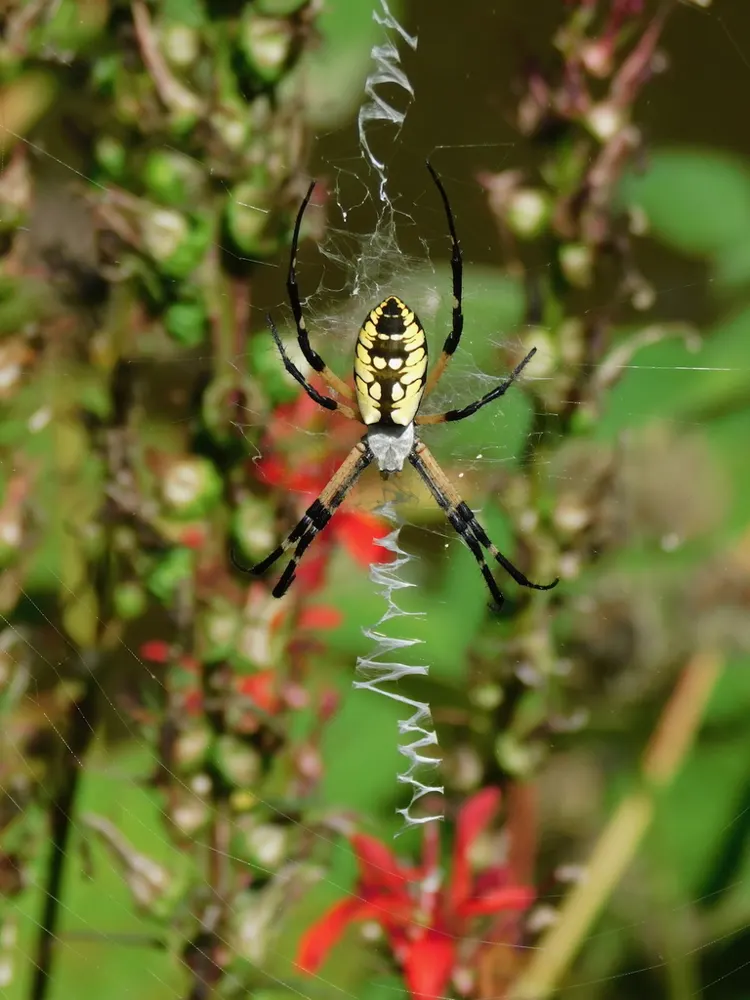
Check these features
- Large female with a bold black-and-yellow (sometimes orange) egg-shaped abdomen
- Silvery-white hairs on the front body section
- Long black legs with yellow, orange or reddish bands near the body
- Big round web, often 1.5 to 3 feet across, with a thick white zigzag down the middle
- Sits head-down in the center of the web in sunny gardens and shrubs
Bites and stings
Bites are rare and almost always happen when someone handles the spider, especially a female guarding her egg sac. A bite can hurt about like a bee or wasp sting, with local redness and swelling. Wash the spot and use a cold pack; get medical care for an unusual or worsening reaction, and call 911 for trouble breathing or swelling of the face or throat.
What to do
- Leave it in place if you can; it is a helpful garden predator and will die off after the first hard frost.
- If the web blocks a doorway or path, carefully catch the spider in a large container and move it to a nearby shrub.
- Never grab it with bare hands; use a container or wear gloves.
- If bitten, wash the area and apply a cold pack; watch for signs of an allergic reaction.
Look-alikes
Why it came inside
It rarely comes indoors; it builds webs in sunny gardens, tall weeds, shrubs and along porches, fences and window frames on the outside of houses.
Keep it out
- Keep shrubs and tall weeds trimmed back from doorways and walkways.
- Reduce bright porch lights near doors, which draw the insects it catches.
- Knock down webs in high-traffic spots with a broom early in the season if you don't want them there.
- Keep window screens in good repair.
What helps
Links go to Amazon search results so you can compare current options. As an Amazon Associate I earn from qualifying purchases. Always follow the product label.
A long-handled catcher moves a spider or insect outside without you having to touch it.
See options on AmazonPatches or replaces torn window and door screens, one of the most common ways insects get in.
See options on AmazonSources
- Penn State Extension
- South Dakota State University Extension
- Mississippi State University Extension
- Oklahoma State University Extension
Checked October 18, 2026. Rating backed by 3 sources. How we rate danger.