
Eastern yellowjacket
Yellowjackets defend their nests hard and can sting many times, so stay back from any nest, and get emergency help if a sting causes trouble breathing or swelling of the face or throat.
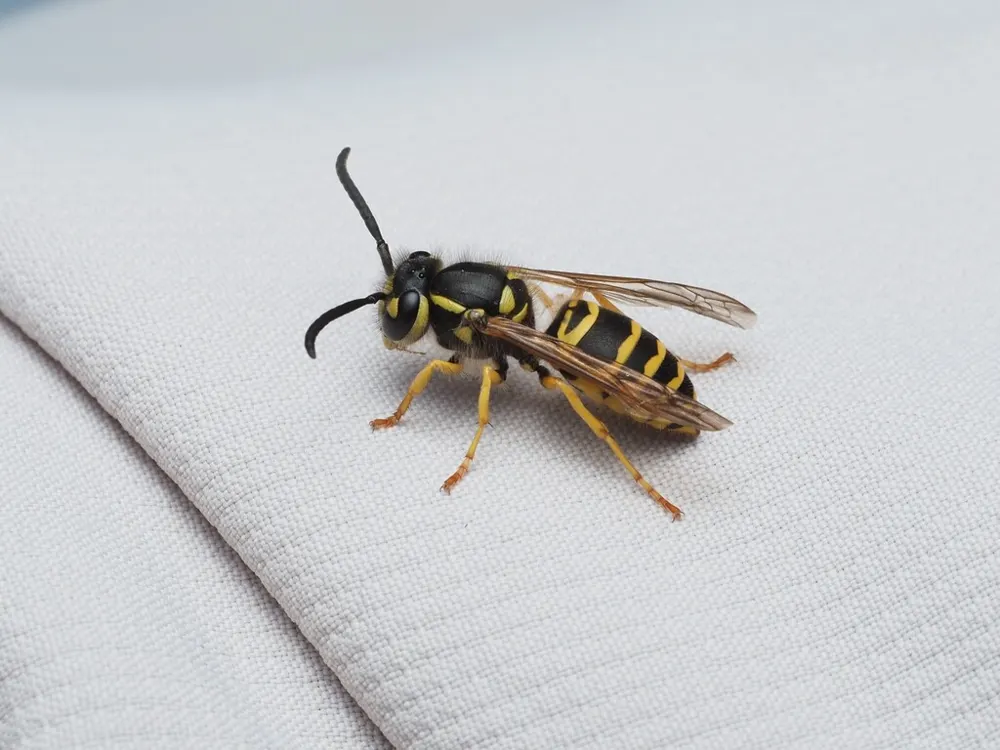
Check these features
- Bright yellow and black bands on a short, stocky body
- Wide black anchor-shaped mark on the top of the first abdominal segment, just behind the waist
- Smooth and shiny, much less hairy than a honey bee
- Holds its legs tucked up close to the body when flying
- Many wasps flying in and out of one small hole in the ground, a wall gap or under siding
Bites and stings
A sting is sharp and painful right away, and soreness, redness, swelling and itching can last a few days. Unlike a honey bee, a yellowjacket can sting again and again, and a disturbed nest can send out many wasps at once. Wash the spot with soap and water and use a cold pack. Get medical care for many stings, stings in the mouth or throat, or swelling that keeps spreading. Call 911 right away for trouble breathing or swallowing, swelling of the face, lips or throat, hives over the body, dizziness or fainting, which are signs of a severe allergic reaction; do not wait to see if it passes.
What to do
- Walk away from the nest area calmly but quickly, and keep children and pets away; if many wasps come out, get indoors.
- If someone is stung, wash the area and apply a cold pack; call 911 for trouble breathing or swelling of the face or throat, and use prescribed epinephrine if the person has it.
- Do not plug or seal a nest hole in a wall; the wasps may chew through to the inside of the house.
- Have a professional remove nests that are in walls, attics, high spots, or anywhere a household member is allergic.
- For a ground nest away from the house, leaving it alone until frost kills the colony is a reasonable choice; if you treat it yourself, use a product labeled for yellowjackets, work after dark, wear protective clothing and follow the label.
- A single yellowjacket indoors can be trapped under a cup or bug catcher and released outside, or let out an open window.
Look-alikes
Why it came inside
Colonies sometimes nest in wall voids, attics or behind siding, and workers can find their way indoors from there, especially if the outside entrance gets blocked. Foragers are also drawn to open sweet drinks, ripe fruit and food scraps, and can follow them through open doors.
Keep it out
- Keep trash and recycling cans tightly covered and rinse out sweet drink containers.
- Pick up fallen and overripe fruit, and cover food and drinks outdoors, checking cans before you sip.
- Caulk gaps in siding, eaves and around pipes and wires before spring, when queens look for nest sites; screen vents.
- Walk the yard in early summer looking for wasps going in and out of a hole before mowing or trimming.
What helps
Links go to Amazon search results so you can compare current options. As an Amazon Associate I earn from qualifying purchases. Always follow the product label.
Silicone or siliconized acrylic caulk closes cracks around windows, pipes and baseboards. Bigger gaps need foam backer rod or expanding foam first.
See options on AmazonPatches or replaces torn window and door screens, one of the most common ways insects get in.
See options on AmazonA long-handled catcher moves a spider or insect outside without you having to touch it.
See options on AmazonSources
- Penn State Extension
- University of Kentucky Entomology (EF620)
- NC State Extension
- University of Florida IFAS (EDIS IN238)
- Oklahoma State University Extension
- CDC / NIOSH
Checked October 18, 2026. Rating backed by 3 sources. How we rate danger.