
Hobo spider
Hobo spiders were long blamed for flesh-damaging bites, but current research does not support that; a rare defensive bite usually causes only mild pain and redness.
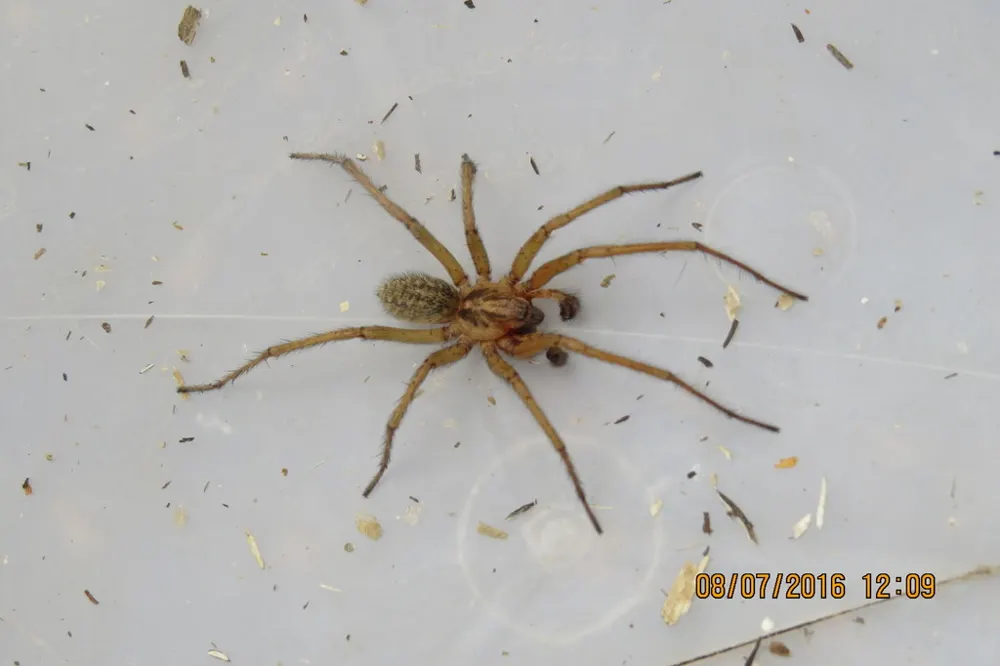
Check these features
- Brown, hairy-looking spider with a brown front body marked by darker bands
- Plain brown legs without dark rings or bands
- Gray abdomen with a pale yellowish chevron (herringbone) pattern down the middle
- Males have two swollen, boxing-glove-like palps near the face
- Builds a flat sheet web leading into a funnel, usually hidden in cracks, woodpiles or under objects near the ground
Bites and stings
Hobo spiders are not aggressive and rarely bite, usually only when trapped against skin. Verified bites have caused brief pain and redness, sometimes mild muscle twitching for a few hours. There is no good evidence they cause dead-skin wounds. Clean any bite and watch it; see a doctor if redness spreads, it becomes hot and painful, or it develops a dark or open sore, since infections and other conditions are often mistaken for spider bites.
What to do
- Wash the bite with soap and water and apply a cool, damp cloth.
- Keep it clean and covered, and watch it for a few days.
- Call 911 for trouble breathing or swelling of the face or throat.
- See a doctor if the area spreads, blisters, darkens or becomes increasingly painful, or you develop a fever.
- If possible, keep the spider intact in a jar so an expert can identify it.
Look-alikes
Why it came inside
It is an outdoor spider that cannot live long-term indoors; adult males wander into homes in late summer and fall while searching for females and often get stuck in sinks and tubs.
Keep it out
- Put sticky traps along baseboards in basements and ground-floor rooms from August to October.
- Replace worn door sweeps, add weatherstripping, repair screens and seal foundation cracks.
- Keep woodpiles, rock piles and debris away from the foundation and inspect firewood before bringing it in.
- Move beds a few inches from walls, skip bed skirts and keep clothes and shoes off the floor in late summer and fall.
- Vacuum regularly to remove spiders, webs and the insects they feed on.
What helps
Links go to Amazon search results so you can compare current options. As an Amazon Associate I earn from qualifying purchases. Always follow the product label.
Flat glue traps set along walls and in corners show what is moving through and where. Place them where pets and children can't reach.
See options on AmazonCloses the gap under an exterior door. If you can see daylight under the door, bugs can get in.
See options on AmazonSeals the gaps around doors and windows that let in drafts and bugs alike.
See options on AmazonSilicone or siliconized acrylic caulk closes cracks around windows, pipes and baseboards. Bigger gaps need foam backer rod or expanding foam first.
See options on AmazonPatches or replaces torn window and door screens, one of the most common ways insects get in.
See options on AmazonLets you remove bugs, webs and egg sacs without touching them. Empty the bag or canister outside right away.
See options on AmazonA long-handled catcher moves a spider or insect outside without you having to touch it.
See options on AmazonSources
- Utah State University Extension
- University of California IPM
- Washington State Department of Health
- Vetter & Isbister 2004 review (hosted by Utah State University Extension)
- Washington State University Extension
- Oregon Department of Agriculture
- Burke Museum, University of Washington
Checked October 18, 2026. Rating backed by 6 sources. How we rate danger.