
Pill bugs and sowbugs
Pill bug
Pill bugs are harmless to people and pets; they do not bite or sting, and one indoors usually means there is dampness nearby.
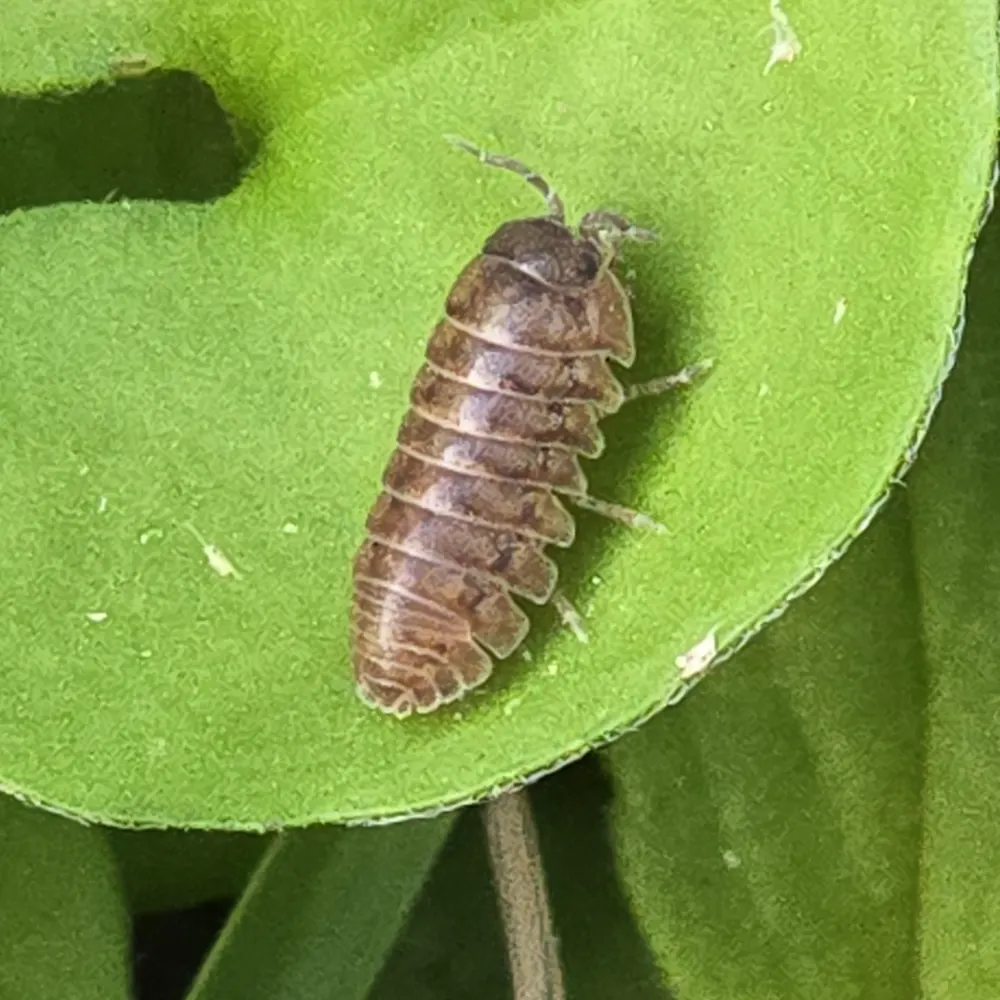
Check these features
- Oval, domed body made of overlapping gray plates like armor
- Usually slate gray, sometimes brown or mottled
- Rolls into a tight ball when touched
- No tail-like points sticking out at the rear
- Seven pairs of legs and one pair of short antennae
Bites and stings
Does not bite people.
What to do
- Pick it up or sweep it up and put it outside; it cannot hurt you.
- Vacuum any others you find, since indoor sprays are of little use against them.
- Look for damp spots near where you found it, such as a leaky pipe, wet basement wall or a soaked doormat, and dry them out.
- Check the outside of the foundation for thick mulch, leaf piles or flowerpots right against the house.
Look-alikes
Why it came inside
Pill bugs need moisture to breathe and live under mulch, leaves, stones and boards next to the house; they wander in under doors and through gaps at ground level, especially after long wet spells, and usually dry out and die indoors unless it is damp.
Keep it out
- Pull mulch, leaf litter, stones and boards back from the foundation.
- Install door sweeps and seal gaps around ground-level doors and windows.
- Keep gutters and grading draining water away from the house.
- Run a dehumidifier and improve airflow in damp basements and crawl spaces.
What helps
Links go to Amazon search results so you can compare current options. As an Amazon Associate I earn from qualifying purchases. Always follow the product label.
Closes the gap under an exterior door. If you can see daylight under the door, bugs can get in.
See options on AmazonSeals the gaps around doors and windows that let in drafts and bugs alike.
See options on AmazonSilicone or siliconized acrylic caulk closes cracks around windows, pipes and baseboards. Bigger gaps need foam backer rod or expanding foam first.
See options on AmazonKeeping a basement at about 50 percent humidity or lower makes it less welcoming to the bugs that need damp air.
See options on AmazonLets you remove bugs, webs and egg sacs without touching them. Empty the bag or canister outside right away.
See options on AmazonSources
- University of Kentucky Entomology (ENTFACT-439: Sowbugs and Pillbugs)
- Clemson Cooperative Extension Home & Garden Information Center
- University of Florida IFAS Extension (Featured Creatures: Pillbug)
- National Institute of Environmental Health Sciences (NIH), Kids pages
- British Myriapod and Isopod Group
Checked October 18, 2026. Rating backed by 4 sources. How we rate danger.
Rough sowbug
Rough sowbugs are harmless to people and pets; they do not bite or sting and simply wander in looking for dampness.
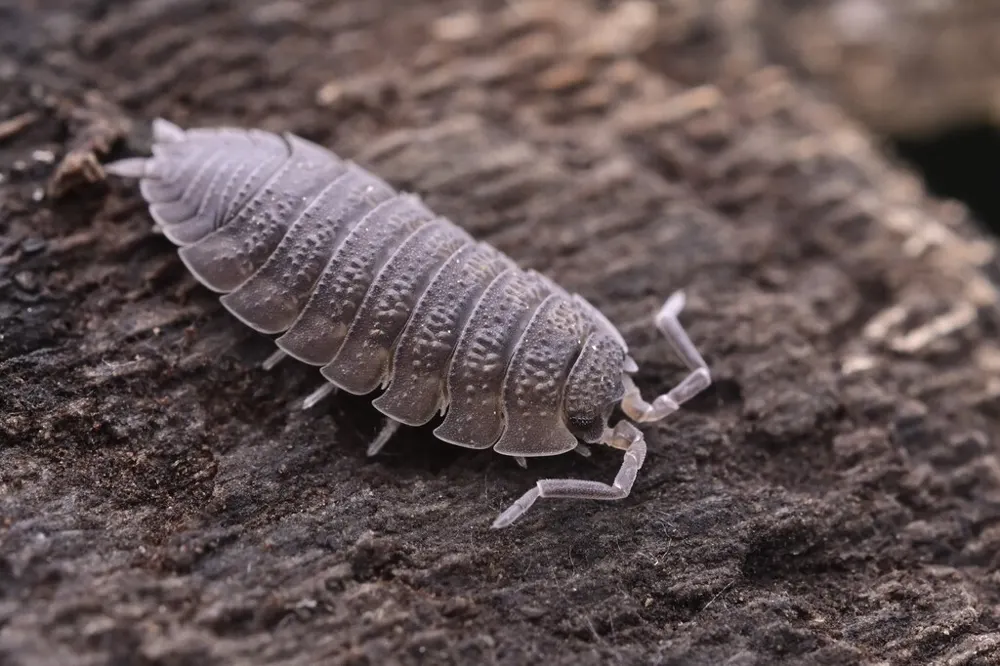
Check these features
- Flattened, oval body of overlapping plates
- Back covered in small bumps that give it a rough, grainy look
- Usually slate gray, though some are mottled or paler
- Two small tail-like points sticking out from the rear
- Cannot roll into a ball; runs away when disturbed and readily climbs walls
Bites and stings
Does not bite people.
What to do
- Pick it up or sweep it up and put it outside, or vacuum it.
- Look for the damp spot that drew it in, such as a leak, wet carpet near a door, or a damp basement corner, and dry it out.
- Check outside along the foundation for thick mulch, leaf piles, firewood or stacked flowerpots and move them away.
- Skip indoor sprays; they help little, and sowbugs die quickly once an area is dry.
Look-alikes
Why it came inside
Sowbugs dry out easily and need moisture, so they live under mulch, leaves, stones and wood near the foundation and come in under doors and through ground-level gaps when it is very wet, or looking for damp spots; this species is the woodlouse most often found inside houses and climbs walls easily.
Keep it out
- Keep mulch, leaves, rotting wood and stones away from the foundation.
- Add door sweeps and weatherstripping, and caulk gaps at ground level.
- Make sure gutters and soil slope carry water away from the house.
- Use a dehumidifier and better ventilation in basements and crawl spaces.
What helps
Links go to Amazon search results so you can compare current options. As an Amazon Associate I earn from qualifying purchases. Always follow the product label.
Closes the gap under an exterior door. If you can see daylight under the door, bugs can get in.
See options on AmazonSeals the gaps around doors and windows that let in drafts and bugs alike.
See options on AmazonSilicone or siliconized acrylic caulk closes cracks around windows, pipes and baseboards. Bigger gaps need foam backer rod or expanding foam first.
See options on AmazonKeeping a basement at about 50 percent humidity or lower makes it less welcoming to the bugs that need damp air.
See options on AmazonLets you remove bugs, webs and egg sacs without touching them. Empty the bag or canister outside right away.
See options on AmazonSources
- University of Kentucky Entomology (ENTFACT-439: Sowbugs and Pillbugs)
- Clemson Cooperative Extension Home & Garden Information Center
- British Myriapod and Isopod Group
- University of Florida IFAS Extension
Checked October 18, 2026. Rating backed by 2 sources. How we rate danger.