
European earwig
Earwigs are harmless; they do not crawl into people's ears, and the rear pincers can at most give a mild pinch if one is trapped against your skin.
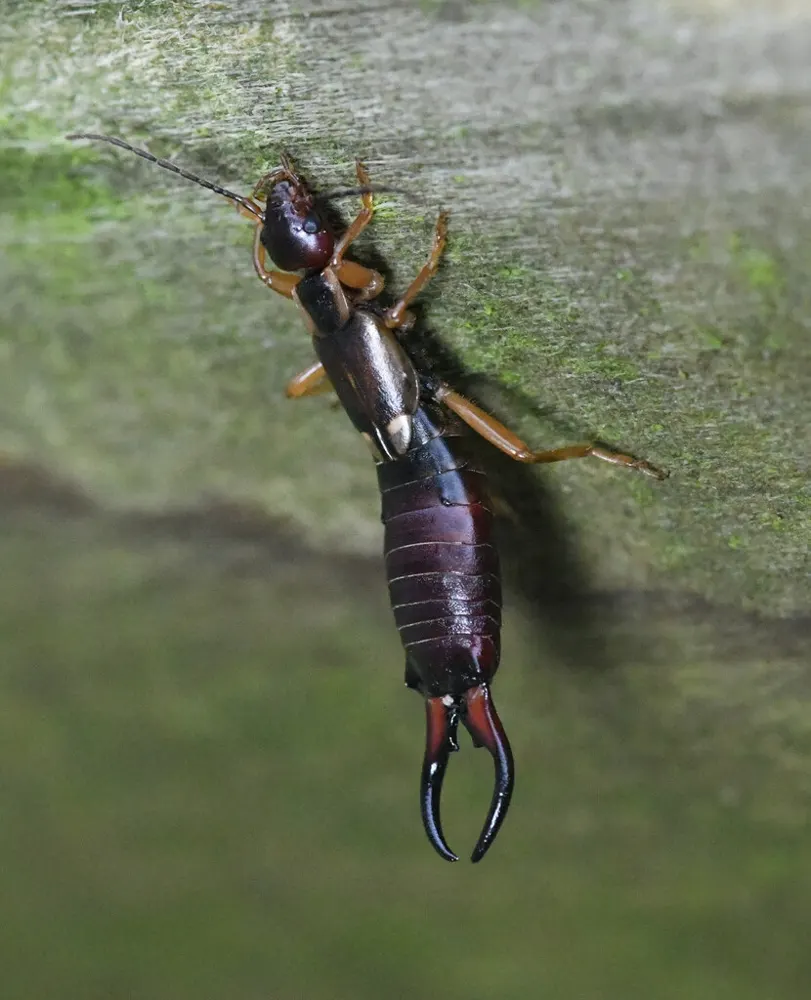
Check these features
- Long, flat, reddish-brown body
- A pair of forceps-like pincers at the rear end
- Males have strongly curved pincers; females have straighter ones
- Short, hard wing covers near the front of the body; rarely flies
- Gives off an unpleasant smell when crushed
Bites and stings
Does not bite people. It does not crawl into ears. If trapped against skin or in clothing it may pinch with its rear pincers, which can feel sharp but rarely breaks the skin; wash the spot with soap and water.
What to do
- Pick it up with a tissue, sweep it into a dustpan or vacuum it; avoid crushing it, since it smells bad.
- Look for damp spots indoors, such as a leak under a sink or a wet basement wall, and dry them out.
- Outside, check for thick mulch, leaf piles or boards right against the foundation where they may be hiding.
- If many keep appearing, roll up damp newspaper or set short tubes outdoors near the foundation at dusk and empty them into soapy water in the morning.
Look-alikes
Why it came inside
Earwigs hide by day in damp, dark places like mulch, leaf litter and under boards, and wander indoors looking for moisture or when it gets too hot, dry or cold outside; many indoors can point to a damp area or drainage problem near the foundation.
Keep it out
- Caulk cracks around the foundation, doors and windows, and keep screens tight.
- Keep mulch thin (about 2 inches) and leave a plant-free strip next to the house.
- Move firewood, boards and stones away from the house.
- Fix drainage so water does not collect near the foundation, and use yellow bulbs on outdoor lights.
What helps
Links go to Amazon search results so you can compare current options. As an Amazon Associate I earn from qualifying purchases. Always follow the product label.
Silicone or siliconized acrylic caulk closes cracks around windows, pipes and baseboards. Bigger gaps need foam backer rod or expanding foam first.
See options on AmazonPatches or replaces torn window and door screens, one of the most common ways insects get in.
See options on AmazonCloses the gap under an exterior door. If you can see daylight under the door, bugs can get in.
See options on AmazonLets you remove bugs, webs and egg sacs without touching them. Empty the bag or canister outside right away.
See options on AmazonKeeping a basement at about 50 percent humidity or lower makes it less welcoming to the bugs that need damp air.
See options on AmazonSources
- Connecticut Agricultural Experiment Station (state agency)
- University of California Statewide IPM Program (Pest Notes: Earwigs)
- West Virginia University Extension Service (hosted by Maine Dept. of Agriculture)
Checked October 18, 2026. Rating backed by 3 sources. How we rate danger.