
Oriental cockroach
Oriental cockroaches do not bite, but they feed on garbage and decaying matter and, like other roaches, can carry germs onto food and leave allergens that can worsen asthma.
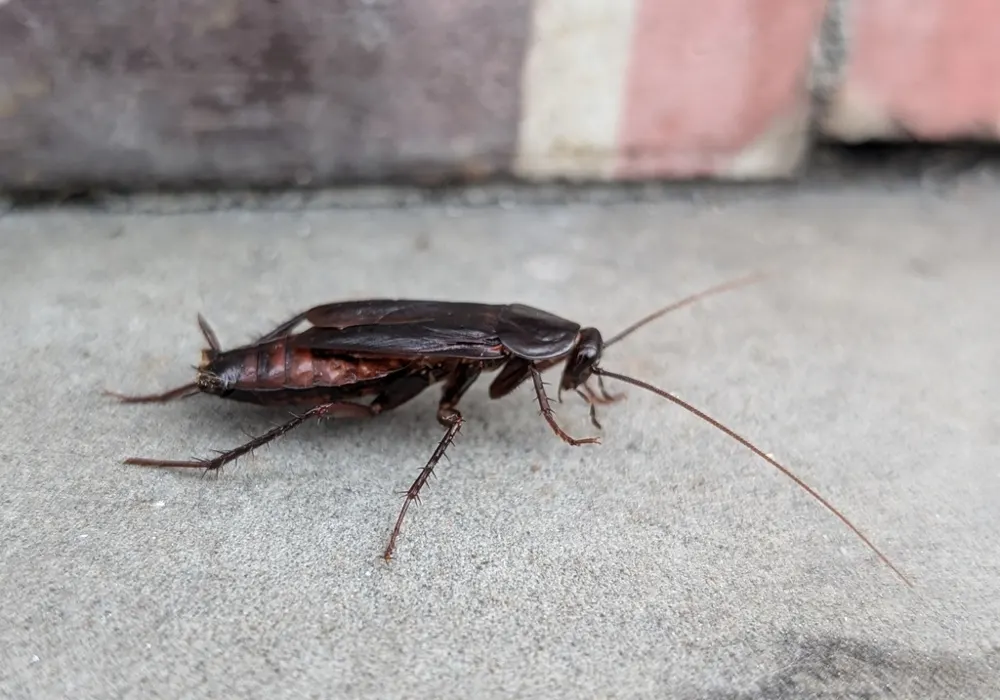
Check these features
- Shiny black to very dark reddish brown body
- Females have only tiny wing pads and look wingless
- Males have wings that cover only part of the abdomen
- Cannot fly and has trouble climbing smooth walls
- Slow-moving, often found at floor level in damp spots
Bites and stings
Does not bite people. The concern is germs carried from garbage and drains onto food, and allergens that can worsen asthma.
What to do
- Pick it up with a bug catcher or paper towel, or catch it on a sticky trap, and remove it; finding one in a sink or tub usually means it slipped in and could not climb out.
- Wipe and wash any surfaces or food it touched.
- Set sticky traps along baseboards in the basement, garage and near drains to see how many are coming in and where.
- Look for the entry point at ground level, such as a gap under an exterior door, a vent, or a damaged drain.
- If they keep coming in, use bait stations along the outside foundation and in hidden indoor spots, following the label, or call a pest professional.
Look-alikes
Why it came inside
Oriental cockroaches live outdoors under leaf litter, stones, mulch, woodpiles and ivy and in drains and water meter boxes, and wander in at ground level under doors, through vents and up through drains, staying in cool, damp places.
Keep it out
- Install door sweeps and weatherstripping on doors at ground level.
- Caulk cracks in the foundation and seal gaps around pipes and vents.
- Pull mulch, leaf litter, ivy and woodpiles back from the foundation.
- Run a dehumidifier in damp basements and fix leaks.
- Keep drain traps filled with water.
What helps
Links go to Amazon search results so you can compare current options. As an Amazon Associate I earn from qualifying purchases. Always follow the product label.
Flat glue traps set along walls and in corners show what is moving through and where. Place them where pets and children can't reach.
See options on AmazonEnclosed baits work slowly as insects carry the bait back to where they hide. Don't spray near the baits, and follow the label.
See options on AmazonCloses the gap under an exterior door. If you can see daylight under the door, bugs can get in.
See options on AmazonSeals the gaps around doors and windows that let in drafts and bugs alike.
See options on AmazonSilicone or siliconized acrylic caulk closes cracks around windows, pipes and baseboards. Bigger gaps need foam backer rod or expanding foam first.
See options on AmazonKeeping a basement at about 50 percent humidity or lower makes it less welcoming to the bugs that need damp air.
See options on AmazonA long-handled catcher moves a spider or insect outside without you having to touch it.
See options on AmazonSources
- University of Kentucky Entomology (ENTFACT-614)
- U.S. Environmental Protection Agency (archived page, Cockroaches and Schools)
- University of California Statewide IPM Program (Pest Notes: Cockroaches)
- Rutgers New Jersey Agricultural Experiment Station
Checked October 18, 2026. Rating backed by 3 sources. How we rate danger.