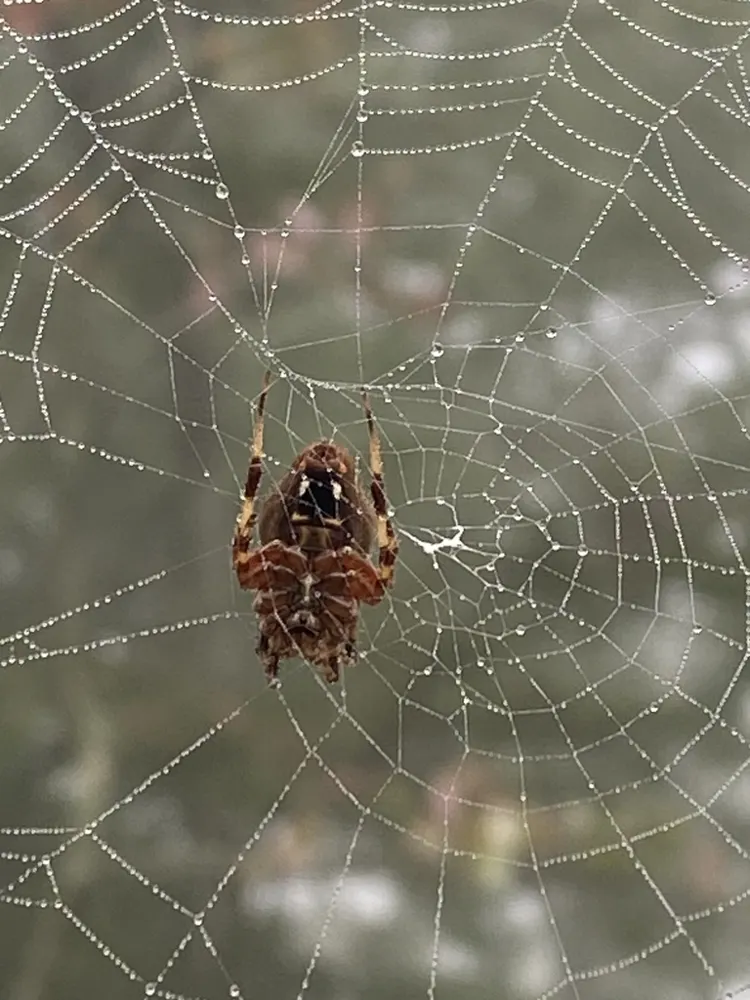
Spotted orbweaver
Harmless: this round brown spider that builds big webs by porch lights at night rarely bites and is not seriously venomous.
Check these features
- Round, plump abdomen in reddish-brown to brown (occasionally pale or white in the North)
- Legs banded reddish-brown and pale yellow
- Often a double row of dark slash marks toward the rear of the abdomen
- Two white spots on the underside of the abdomen
- Big round web, up to about 2 feet across, strung from eaves or porch lights; spider sits in the center at night
Bites and stings
Rarely bites people; any bite is not known to cause serious effects. Wash the spot and get medical advice only if it spreads, looks infected, or you have signs of an allergic reaction.
What to do
- Leave it alone if the web is out of the way; it catches many night-flying insects.
- If the web is over a door or path, take it down with a broom in daylight when the spider is hiding, or move the spider with a container.
- Don't handle it with bare hands.
Look-alikes
Why it came inside
It is an outdoor spider that builds webs on eaves, porches, decks and near outside lights because the lights attract insects at night; it may occasionally end up in an open garage or on a window frame.
Keep it out
- Turn off porch lights when not needed, or use yellow-tinted bulbs that draw fewer insects.
- Sweep webs from eaves and porch corners regularly during late summer and fall.
- Trim shrubs and branches back from doorways and walkways.
- Keep window screens in good repair and fit door sweeps so spiders don't move indoors.
What helps
Links go to Amazon search results so you can compare current options. As an Amazon Associate I earn from qualifying purchases. Always follow the product label.
Patches or replaces torn window and door screens, one of the most common ways insects get in.
See options on AmazonCloses the gap under an exterior door. If you can see daylight under the door, bugs can get in.
See options on AmazonA long-handled catcher moves a spider or insect outside without you having to touch it.
See options on AmazonSources
- Mississippi State University Extension
- University of Florida IFAS (Featured Creatures / EDIS)
- UC Statewide IPM Program
Checked October 18, 2026. Rating backed by 2 sources. How we rate danger.