
Long-bodied cellar spider
Harmless to people: this is the classic "daddy longlegs" spider of basements and ceiling corners, and the story that it is deadly is a myth.
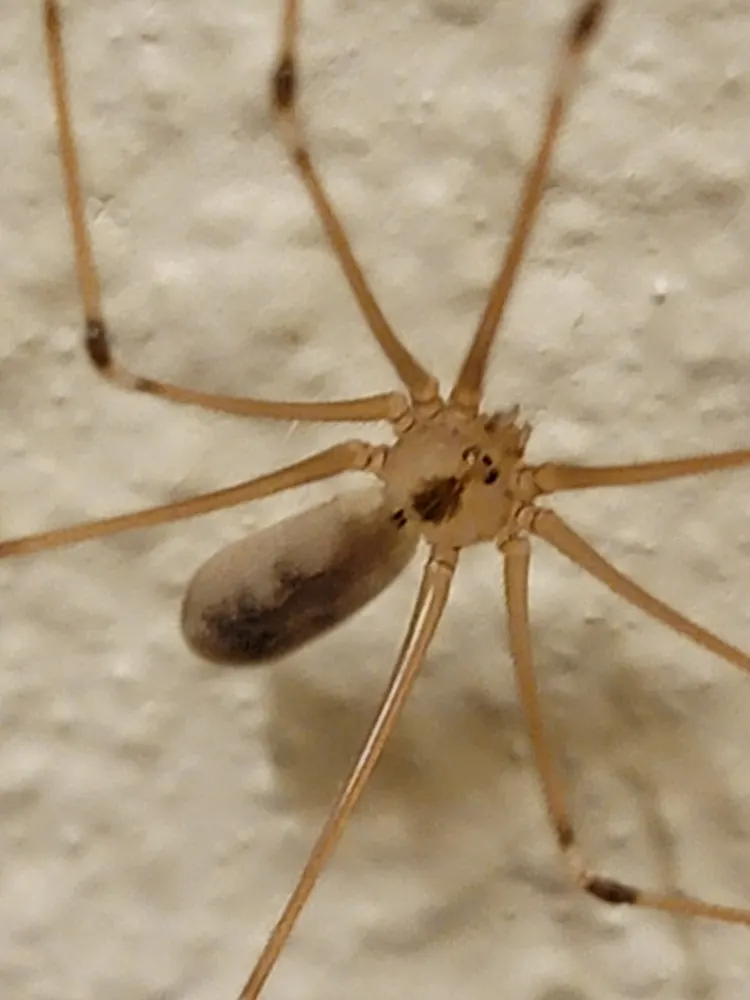
Check these features
- Very long, thin legs, many times longer than the body
- Pale tan to yellowish body with a long, tube-shaped abdomen
- Grayish mark in the middle of the front body section
- Hangs upside down in a loose, messy web in ceiling corners
- Shakes or whirls in its web when disturbed so it blurs
Bites and stings
Not known to bite people; it is not considered medically important.
What to do
- Leave it alone or remove it; it poses no danger to you, children or pets.
- To move one, cover it with a cup, slide a card underneath, and release it outside.
- Vacuum webs and spiders from corners if the webbing bothers you.
- Consider leaving a few in basements and garages, since they eat other spiders and insects.
Look-alikes
Why it came inside
It is a mostly indoor spider that lives its whole life in quiet, sheltered parts of buildings, catching insects and other spiders that wander into its web.
Keep it out
- Vacuum ceiling corners, window frames and basement rafters regularly.
- Seal cracks and gaps around windows, doors and the foundation with caulk.
- Keep window and door screens in good repair and fit door sweeps.
- Cut down on clutter and stored boxes in basements and garages.
What helps
Links go to Amazon search results so you can compare current options. As an Amazon Associate I earn from qualifying purchases. Always follow the product label.
Lets you remove bugs, webs and egg sacs without touching them. Empty the bag or canister outside right away.
See options on AmazonSilicone or siliconized acrylic caulk closes cracks around windows, pipes and baseboards. Bigger gaps need foam backer rod or expanding foam first.
See options on AmazonCloses the gap under an exterior door. If you can see daylight under the door, bugs can get in.
See options on AmazonPatches or replaces torn window and door screens, one of the most common ways insects get in.
See options on AmazonA long-handled catcher moves a spider or insect outside without you having to touch it.
See options on AmazonSources
- Penn State Extension
- UF/IFAS Extension Manatee County
- University of California, Riverside (Rick Vetter spider site)
- UC Statewide IPM Program
Checked October 18, 2026. Rating backed by 4 sources. How we rate danger.