
Southern house spider
Harmless: the long-legged tan males are often mistaken for brown recluses, but this spider is reluctant to bite and its venom is not medically significant.
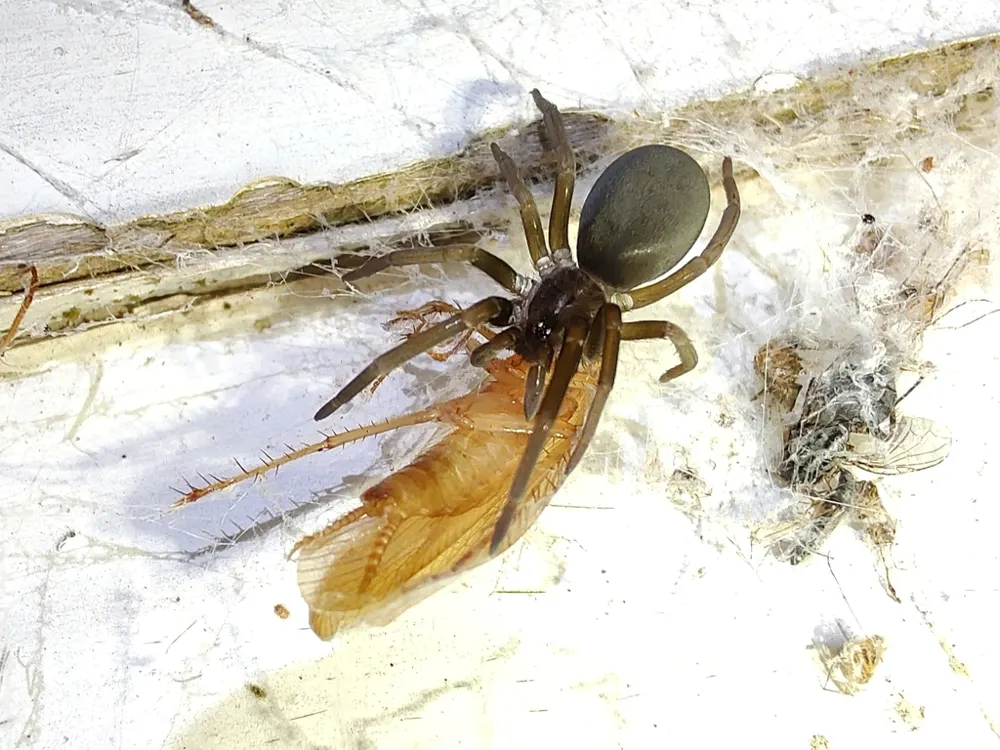
Check these features
- Female: velvety charcoal-gray to dark brown, heavy-bodied, found at a flat, messy web around a crack
- Male: tan to amber with very long, thin legs and long palps that look like an extra pair of legs
- Eight eyes clustered together on a small bump at the front of the head
- Woolly, flat, radiating web around a crevice in window frames, shutters or eaves
- Male has a narrow brown stripe on the front body behind the eyes
Bites and stings
Rarely bites and is reluctant to do so. The few reported bites caused local pain and swelling that went away within about two days. Get medical advice if a bite area spreads, blisters, looks infected, or if you have signs of an allergic reaction.
What to do
- Don't panic: look for the eight bunched eyes and very long palps that set a male apart from a brown recluse.
- Trap it under a cup with a card and move it outdoors, or vacuum it up.
- Vacuum or brush away flat, woolly webs from window frames and corners, including egg sacs.
- If you are still unsure whether it is a recluse, save it in a sealed jar and send a photo or sample to your county extension office.
Look-alikes
Why it came inside
Females live for years in cracks around windows, shutters, eaves and masonry and can end up indoors through gaps; males wander in while looking for females.
Keep it out
- Seal cracks in window casings, gaps around doors and holes where pipes and wires enter with caulk.
- Repair window and door screens and fit door sweeps to keep out spiders and the insects they eat.
- Vacuum baseboards, under furniture and window frames regularly.
- Check firewood for spiders and egg sacs before bringing it inside.
What helps
Links go to Amazon search results so you can compare current options. As an Amazon Associate I earn from qualifying purchases. Always follow the product label.
Silicone or siliconized acrylic caulk closes cracks around windows, pipes and baseboards. Bigger gaps need foam backer rod or expanding foam first.
See options on AmazonPatches or replaces torn window and door screens, one of the most common ways insects get in.
See options on AmazonCloses the gap under an exterior door. If you can see daylight under the door, bugs can get in.
See options on AmazonLets you remove bugs, webs and egg sacs without touching them. Empty the bag or canister outside right away.
See options on AmazonA long-handled catcher moves a spider or insect outside without you having to touch it.
See options on AmazonA 10x magnifier makes small features easier to check, like eye patterns, markings or the shield on a tick.
See options on AmazonSources
Checked October 18, 2026. Rating backed by 2 sources. How we rate danger.