
Indianmeal moth
Indianmeal moths do not bite or sting; the caterpillars spoil dry foods with webbing and droppings, so infested food should be thrown out.
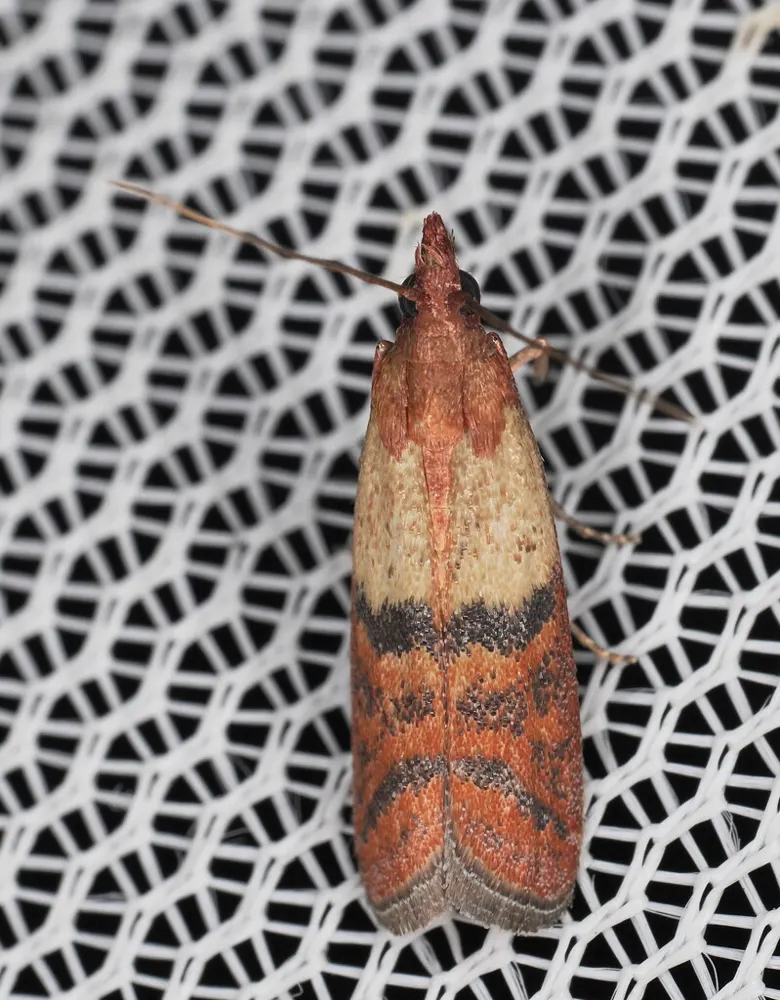
Check these features
- Small moth that rests with wings folded flat along its back
- Inner part of each front wing pale gray-cream; outer half to two-thirds a coppery red-brown
- Weak, zigzag flight, often around the kitchen at night
- Caterpillar is whitish (sometimes pinkish or greenish) with a brown head
- Silky webbing and clumped food inside packages; caterpillars wander to ceiling corners and shelf undersides to spin cocoons
Bites and stings
Does not bite people.
What to do
- Check all dry foods for webbing, clumps or caterpillars, especially cereal, flour, nuts, dried fruit, chocolate, spices, birdseed and dry pet food.
- Throw out infested food sealed in a bag in the outdoor trash; there is no good way to separate the insects from the food.
- Vacuum shelves, cracks and the corners where walls meet ceilings or shelves, then wash with warm soapy water; do not spray pesticides on food shelves.
- Freeze foods you want to keep and suspect are lightly infested for several days to kill hidden stages.
- Use pheromone moth traps to see if moths are still around; they help find a source but do not solve the problem alone.
Look-alikes
Why it came inside
It usually comes home as eggs or tiny caterpillars in an infested package of grain, nuts, dried fruit, birdseed or pet food, then spreads from package to package. Adults do not feed; the caterpillars eat the food.
Keep it out
- Store dry foods, birdseed and pet food in glass jars or metal or heavy plastic containers with tight lids, not bags or cardboard.
- Buy flour, nuts and other seldom-used foods in amounts you will use soon, and use older packages first.
- Inspect packages when you bring them home and clean up spills promptly.
- Keep pantry areas cool and dry.
What helps
Links go to Amazon search results so you can compare current options. As an Amazon Associate I earn from qualifying purchases. Always follow the product label.
Glass or thick plastic containers with tight lids keep pantry pests out of flour, cereal, rice and pet food.
See options on AmazonCatch male moths and show whether you have a problem. They help you monitor, but won't end an infestation on their own.
See options on AmazonLets you remove bugs, webs and egg sacs without touching them. Empty the bag or canister outside right away.
See options on AmazonSources
- Colorado State University Extension
- Utah State University Extension
- Cornell Cooperative Extension Monroe County
- University of Maryland Extension
- Mississippi State University Extension
- Rutgers NJAES (clothes moth comparison)
Checked October 18, 2026. Rating backed by 3 sources. How we rate danger.