
Fruit flies and drain flies
Fruit fly
Fruit flies do not bite; they are a kitchen nuisance that breeds in overripe produce and sticky residue, so toss food they have been crawling on.
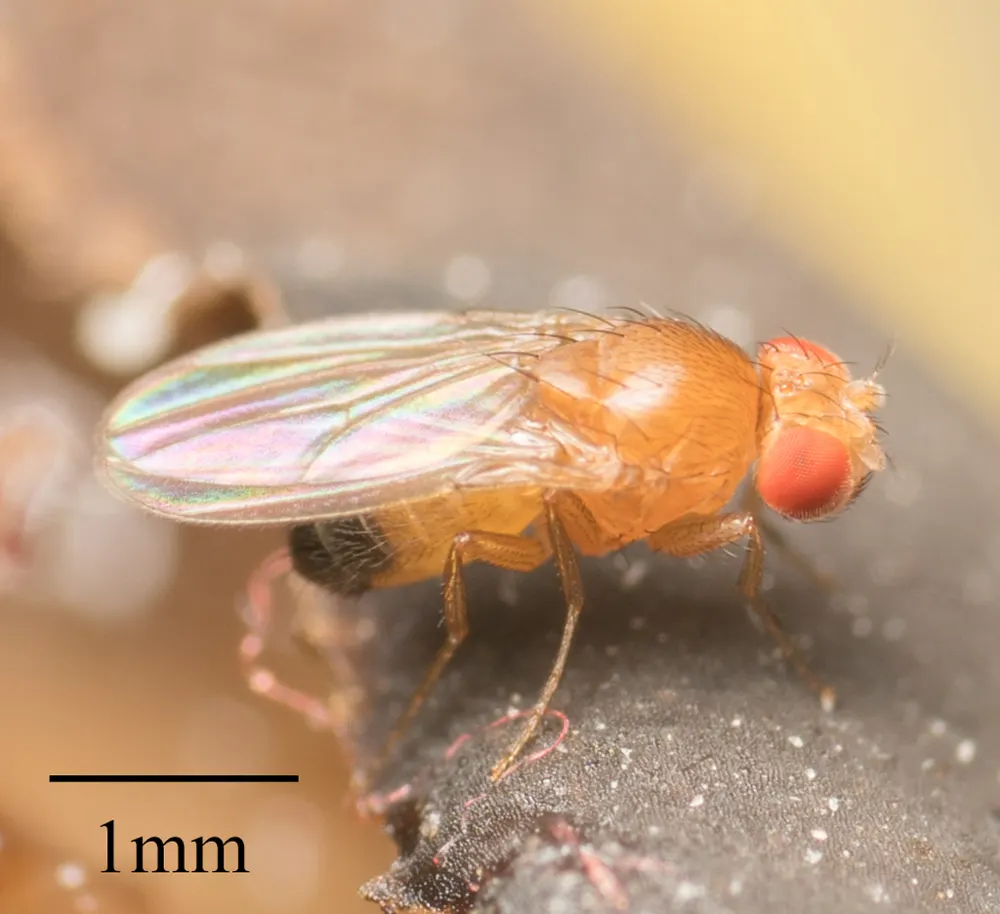
Check these features
- Tiny tan to yellowish-brown fly with a darker rear end
- Bright red eyes (easy to see with a magnifier)
- Clear wings held flat over the back
- Hovers slowly around fruit bowls, trash, recycling, wine and vinegar
- Whitish, legless larvae in mushy fruit or wet residue
Bites and stings
Does not bite people.
What to do
- Find and remove what they are breeding in: overripe fruit, a forgotten potato or onion, spilled juice, sticky recycling, a dirty mop, or the bottom of the trash can.
- Refrigerate ripe produce, rinse bottles and cans before recycling, and empty trash often.
- Tape a clear plastic bag or cup over a sink drain or disposal overnight; flies caught inside mean the drain is a source and needs scrubbing.
- Use fruit fly traps or a jar of cider vinegar with a drop of dish soap and a plastic-wrap cover with small holes to catch adults.
- Throw out food flies have been crawling on for a while and wipe counters; sprays only kill adults and do not fix the source.
Look-alikes
Why it came inside
Adults are drawn by the smell of fermenting fruit, juice, beer, wine and vinegar and fly in through screens or ride in on produce. They breed in overripe fruit and vegetables, stored potatoes and onions, garbage disposals and drains, recycling, and damp mops and rags.
Keep it out
- Keep ripe fruit in the refrigerator and do not leave cut fruit out.
- Rinse recyclables and keep trash and compost containers lidded and clean.
- Wring out and dry mops, sponges and rags.
- Keep fine-mesh screens on windows and doors.
What helps
Links go to Amazon search results so you can compare current options. As an Amazon Associate I earn from qualifying purchases. Always follow the product label.
Catch the adults, but the fix is finding and removing the ripe fruit or drain film where they breed.
See options on AmazonPatches or replaces torn window and door screens, one of the most common ways insects get in.
See options on AmazonA 10x magnifier makes small features easier to check, like eye patterns, markings or the shield on a tick.
See options on AmazonSources
- University of Kentucky Entomology (ENTFACT-621)
- University of Maryland Extension
- University of Wisconsin-Madison Extension
- University of Wisconsin-Madison Division of Extension, Marinette County
- Connecticut Agricultural Experiment Station (drain fly comparison)
Checked October 18, 2026. Rating backed by 3 sources. How we rate danger.
Drain fly
Drain flies do not bite; they are a sign of slimy buildup in a drain or a hidden plumbing problem, and they go away once the source is cleaned.
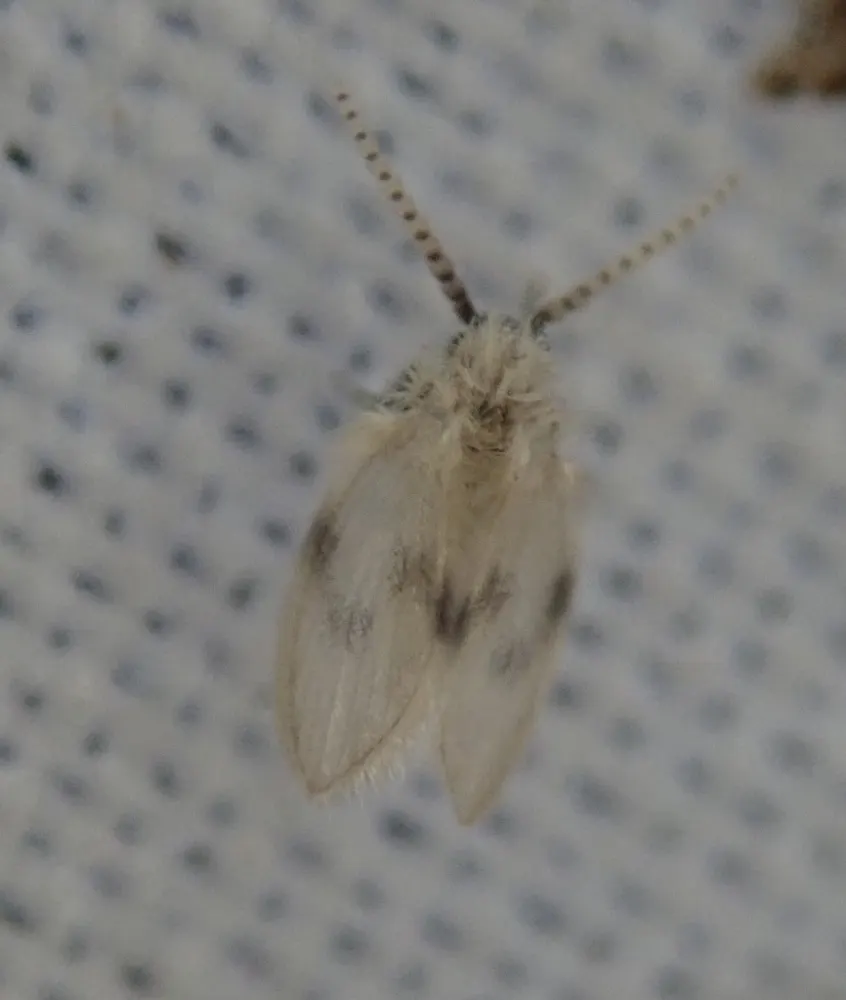
Check these features
- Tiny gray to black fly that looks fuzzy, like a miniature moth
- Broad, hairy wings held like a peaked roof or tent over the body at rest
- Rests on bathroom and kitchen walls near sinks, tubs and showers
- Weak flier that moves in short, jerky hops of a few feet
- Larvae are tiny gray legless worms living in the slime inside drains
Bites and stings
Does not bite people. Very large numbers have occasionally caused allergy symptoms in sensitive people.
What to do
- Find the source: tape a clear cup or plastic bag over each suspect drain and sink overflow overnight, and wrap clear tape around the base of the toilet; flies caught inside point to the breeding spot.
- Scrub the inside of the drain, trap and overflow with a stiff pipe brush to remove the slime where larvae live.
- Use an enzyme or biological drain cleaner afterward to keep buildup from returning; boiling water and pesticides alone do not reach larvae hidden in the slime.
- Run water in seldom-used sinks, tubs and floor drains regularly.
- If flies keep coming with clean drains, check for a broken pipe, failed toilet seal or wet crawlspace and have a plumber repair it.
Look-alikes
Why it came inside
They breed in the slimy film of bacteria and organic gunk inside sink, tub, shower and floor drains, overflow holes, and seldom-used pipes, or around a broken pipe or leaking toilet seal under a floor. Outdoors they breed in clogged gutters, septic and sewage areas, and wet compost.
Keep it out
- Clean drains and overflow holes on a regular schedule.
- Run water through guest-bath and basement drains at least weekly.
- Fix leaks and moisture problems under sinks, slabs and crawlspaces.
- Keep gutters clear and garbage cans clean and dry.
What helps
Links go to Amazon search results so you can compare current options. As an Amazon Associate I earn from qualifying purchases. Always follow the product label.
Flat glue traps set along walls and in corners show what is moving through and where. Place them where pets and children can't reach.
See options on AmazonA 10x magnifier makes small features easier to check, like eye patterns, markings or the shield on a tick.
See options on AmazonKeeping a basement at about 50 percent humidity or lower makes it less welcoming to the bugs that need damp air.
See options on AmazonSources
- Connecticut Agricultural Experiment Station
- Washington State University Extension (PestSense)
- Utah State University Extension
- Oklahoma State University Extension
- University of Wisconsin-Madison Division of Extension, Marinette County
Checked October 18, 2026. Rating backed by 3 sources. How we rate danger.