
Carpet beetles
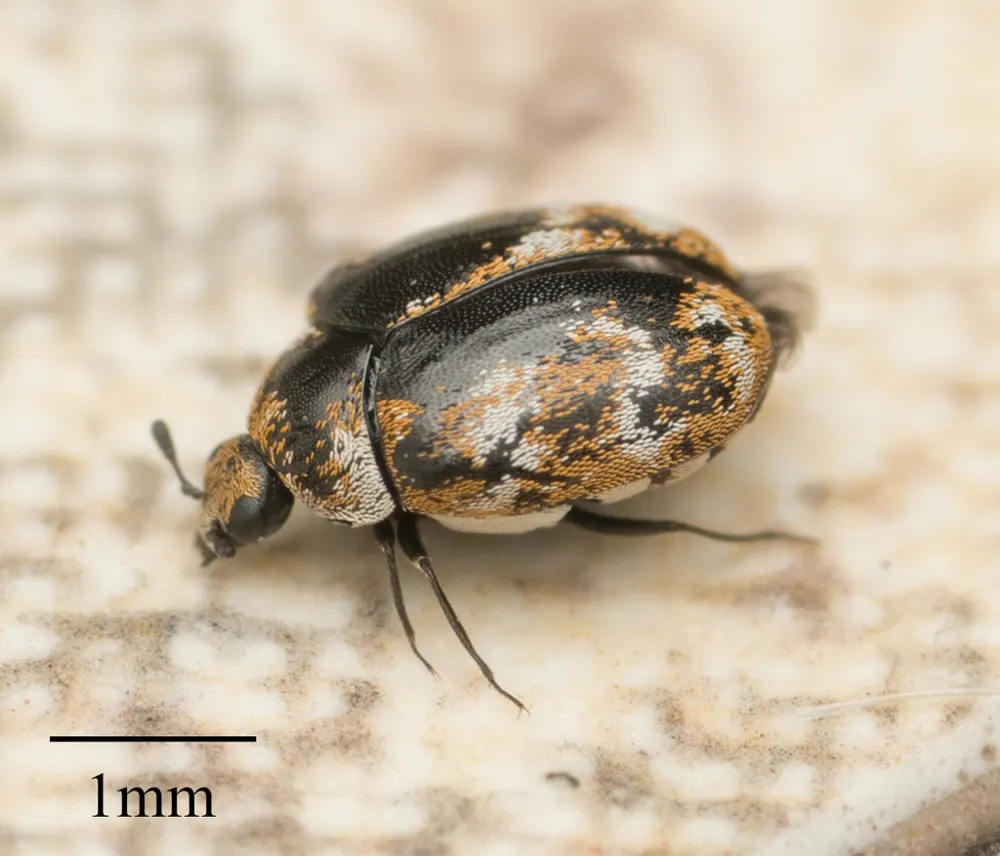
Varied carpet beetle
Varied carpet beetles do not bite, but their larvae chew holes in wool and other natural fabrics, and their tiny hairs can make some people itch.
Check these features
- Tiny, nearly round beetle, smaller than a ladybug
- Mottled, calico-like pattern of white, brown, yellow-orange and black scales
- Adults often found on window sills, especially in spring
- Larva is a short, fat, hairy brown grub, wider at the back end, with bands of bristly hairs
- Light brown shed larval skins in closets, drawers or along carpet edges
Bites and stings
Does not bite people. Some people get an itchy rash, hives or hay fever-like symptoms from touching the larvae's hairs or shed skins; see a health care provider if a rash lasts or you have eye or breathing irritation.
What to do
- Find the source: check closets, drawers, under heavy furniture and rugs, along baseboards, in air vents, and anywhere wool, fur, feathers, pet hair or dried pet food sits undisturbed.
- Vacuum carpets, rug edges, baseboards, vents and closet floors thoroughly, then take the vacuum bag or canister contents outside right away.
- Wash, dry clean or throw out infested clothing, blankets and rugs; items that cannot be washed can be frozen at 0 °F (-18 °C) for about two weeks.
- If you have an itchy rash that will not go away, or eye or breathing irritation, see a health care provider and mention possible carpet beetle exposure.
- For a widespread problem with no source you can find, call a pest professional; foggers do not work well against carpet beetles.
Look-alikes
Why it came inside
Adults feed on flower pollen outside and fly in through windows or ride in on cut flowers, then lay eggs where larvae can feed on wool, fur, feathers, lint, pet hair, dead insects or old nests. The adults seen at windows in spring usually grew up indoors and are trying to get outside.
Keep it out
- Clean wool and other animal-fiber clothing before storing it, and store it in tightly sealed containers or garment bags.
- Vacuum regularly under furniture, along baseboards and inside closets to remove lint, hair and crumbs the larvae feed on.
- Keep window and vent screens in good repair, and shake out cut flowers before bringing them inside.
- Remove old bird, wasp or rodent nests from attics, eaves and chimneys, and clear out dead insects from window sills and light fixtures.
- Store dried pet food, birdseed and other dry goods in sealed containers.
What helps
Links go to Amazon search results so you can compare current options. As an Amazon Associate I earn from qualifying purchases. Always follow the product label.
Lets you remove bugs, webs and egg sacs without touching them. Empty the bag or canister outside right away.
See options on AmazonZippered bags keep clothes moths and carpet beetles away from stored wool. Clean clothes before storing them.
See options on AmazonGlass or thick plastic containers with tight lids keep pantry pests out of flour, cereal, rice and pet food.
See options on AmazonPatches or replaces torn window and door screens, one of the most common ways insects get in.
See options on AmazonFlat glue traps set along walls and in corners show what is moving through and where. Place them where pets and children can't reach.
See options on AmazonScorpions glow under ultraviolet light, which makes them much easier to spot at night.
See options on AmazonA 10x magnifier makes small features easier to check, like eye patterns, markings or the shield on a tick.
See options on AmazonSources
- Penn State Extension
- University of Nebraska-Lincoln Extension, Lancaster County
- Ohio State University Extension (Ohioline)
- University of Maryland Extension
- NC State Plant Disease and Insect Clinic
Checked October 18, 2026. Rating backed by 2 sources. How we rate danger.
Black carpet beetle
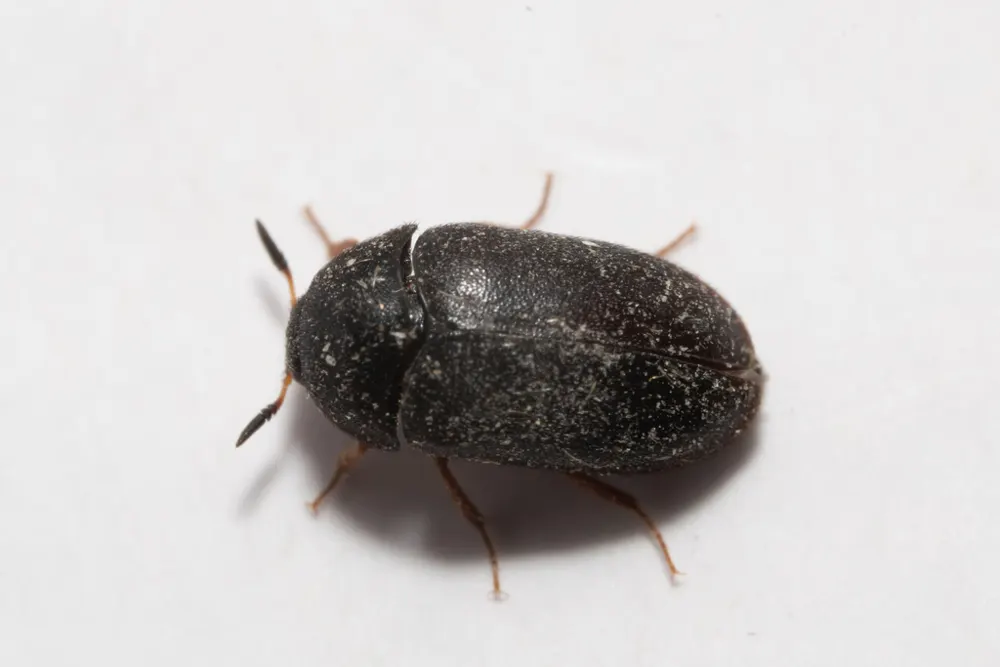
Black carpet beetles do not bite, but their larvae damage wool, fur and stored dry foods, and their hairs can make some people itch.
Check these features
- Small oval beetle, solid shiny black to dark brown, with brownish legs
- No colored pattern on the back
- Larva is slim, carrot- or cigar-shaped and golden to dark brown, with a long tuft of hairs at the tail end
- Larvae hide from light in rug edges, drawers, upholstery and dry foods
- Shed larval skins and small holes or bare patches in wool or felt
Bites and stings
Does not bite people. Some people get an itchy rash or hay fever-like symptoms from contact with the larvae's hairs; see a health care provider if a rash lasts or you have eye or breathing irritation.
What to do
- Find the source: check closets, drawers, under heavy furniture and rugs, along baseboards, in air vents, and anywhere wool, fur, feathers, pet hair or dried pet food sits undisturbed.
- Vacuum carpets, rug edges, baseboards, vents and closet floors thoroughly, then take the vacuum bag or canister contents outside right away.
- Check pantry items such as flour, cereal, dried pet food and birdseed, and throw out any with larvae or shed skins.
- Wash, dry clean or throw out infested clothing, blankets and rugs; items that cannot be washed can be frozen at 0 °F (-18 °C) for about two weeks.
- If you have an itchy rash that will not go away, or eye or breathing irritation, see a health care provider and mention possible carpet beetle exposure.
Look-alikes
Why it came inside
Adults live outdoors on flowers and fly in through windows and doors, then lay eggs in wool, fur, feathers, lint, pet hair, dried pet food or stored grains. Larvae can live for many months indoors, so infestations build slowly out of sight.
Keep it out
- Clean wool and other animal-fiber clothing before storing it, and store it in tightly sealed containers or garment bags.
- Vacuum regularly under furniture, along baseboards and inside closets to remove lint, hair and crumbs the larvae feed on.
- Keep window and vent screens in good repair, and shake out cut flowers before bringing them inside.
- Remove old bird, wasp or rodent nests from attics, eaves and chimneys, and clear out dead insects from window sills and light fixtures.
- Store dried pet food, birdseed and other dry goods in sealed containers.
What helps
Links go to Amazon search results so you can compare current options. As an Amazon Associate I earn from qualifying purchases. Always follow the product label.
Lets you remove bugs, webs and egg sacs without touching them. Empty the bag or canister outside right away.
See options on AmazonZippered bags keep clothes moths and carpet beetles away from stored wool. Clean clothes before storing them.
See options on AmazonGlass or thick plastic containers with tight lids keep pantry pests out of flour, cereal, rice and pet food.
See options on AmazonPatches or replaces torn window and door screens, one of the most common ways insects get in.
See options on AmazonFlat glue traps set along walls and in corners show what is moving through and where. Place them where pets and children can't reach.
See options on AmazonScorpions glow under ultraviolet light, which makes them much easier to spot at night.
See options on AmazonA 10x magnifier makes small features easier to check, like eye patterns, markings or the shield on a tick.
See options on AmazonSources
- Penn State Extension
- University of Nebraska-Lincoln Extension, Lancaster County
- Ohio State University Extension (Ohioline)
- University of Maryland Extension
Checked October 18, 2026. Rating backed by 2 sources. How we rate danger.