
Odorous house ant
Odorous house ants do not sting and are no danger to people; they are a nuisance that gets into sweets and other food.
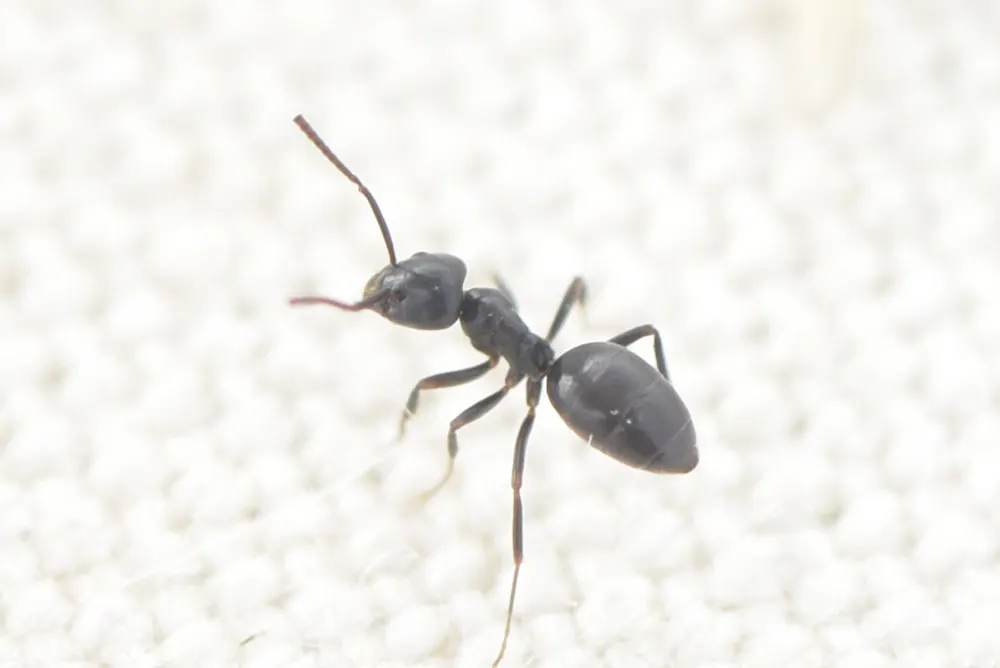
Check these features
- Tiny, uniformly dark brown to black ant
- Gives off a strong rotten-coconut smell when crushed
- Waist node is small and hidden under the rear end, so the waist looks smooth from above
- Runs fast and erratically, often with its rear end raised, when disturbed
- Forms long trails along baseboards, counters, carpet edges and foundations
Bites and stings
Does not sting. It may nip if pressed against the skin, but this is not harmful.
What to do
- Wipe up the trail and any spills with soapy water, and put sweets and pantry food into sealed containers.
- Place bait stations made for sugar-feeding ants along trails, keep them filled, and follow the label; expect two weeks or more for results.
- Do not spray insecticide on or near the trail while baiting, since it stops workers from carrying bait back to the nest.
- Find where ants enter and seal cracks around windows, doors, pipes and wires with caulk.
- Fix leaks and damp spots indoors; call a pro if ants keep coming back from inside the walls.
Look-alikes
Why it came inside
They forage indoors for sweets and other foods and look for warm, damp nest spots such as wall voids near hot water pipes, leaks, insulation and around tubs. Large numbers can move in after a change in the weather.
Keep it out
- Store food in sealed containers and clean up crumbs, spills and pet food promptly.
- Seal cracks and gaps in the foundation, window frames and door frames.
- Keep mulch, boards, stones and plants pulled back from the foundation and prune branches that touch the house.
- Fix plumbing leaks and keep sprinklers from soaking the foundation.
What helps
Links go to Amazon search results so you can compare current options. As an Amazon Associate I earn from qualifying purchases. Always follow the product label.
Enclosed baits work slowly as insects carry the bait back to where they hide. Don't spray near the baits, and follow the label.
See options on AmazonSilicone or siliconized acrylic caulk closes cracks around windows, pipes and baseboards. Bigger gaps need foam backer rod or expanding foam first.
See options on AmazonGlass or thick plastic containers with tight lids keep pantry pests out of flour, cereal, rice and pet food.
See options on AmazonSeals the gaps around doors and windows that let in drafts and bugs alike.
See options on AmazonCloses the gap under an exterior door. If you can see daylight under the door, bugs can get in.
See options on AmazonSources
- Utah State University Extension
- Penn State Extension
- University of California IPM
- University of Arizona Cooperative Extension, Yavapai County
Checked October 18, 2026. Rating backed by 2 sources. How we rate danger.