
Pharaoh ant
Pharaoh ants do not bite or sting people, but they can carry germs onto food and surfaces, which matters most in homes with newborns or someone with wounds or a weak immune system.
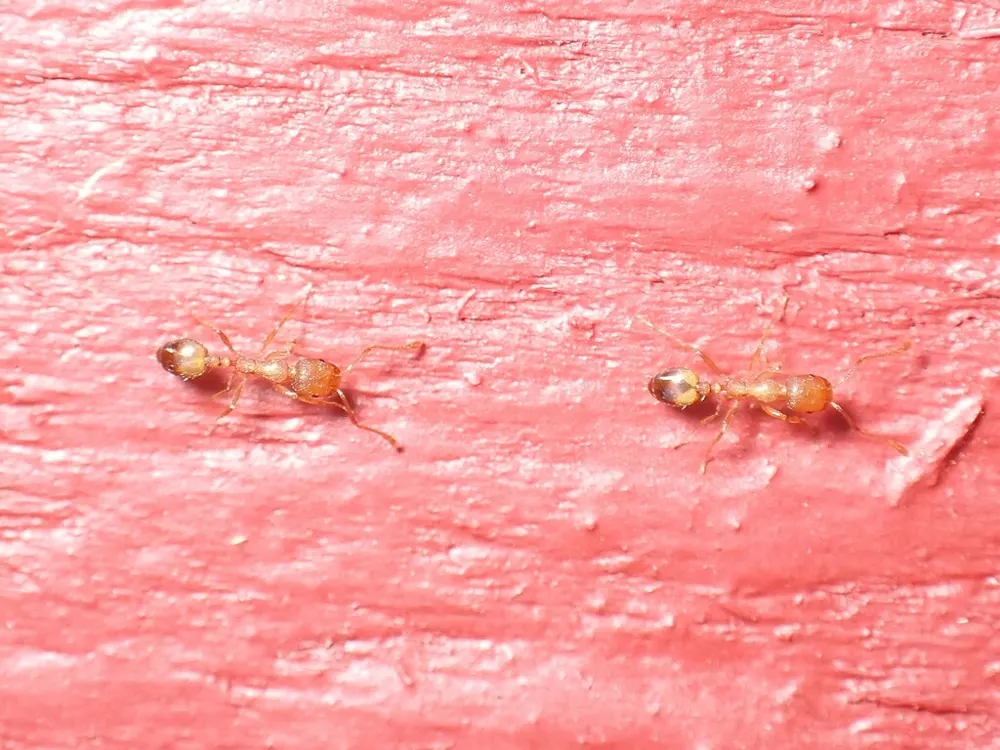
Check these features
- Very tiny, pale yellow to light reddish-brown ant
- Rear end (gaster) often darker, brownish to blackish
- Two bumps (nodes) in the waist
- Antenna ends in a club of three segments (needs a magnifier)
- Trails of tiny pale ants along baseboards, cabinets, outlets and pipes, often in warm rooms
Bites and stings
Does not bite or sting people in any meaningful way. The concern is that they walk through trash and drains and then onto food, dishes and surfaces. Throw away food they have gotten into. If someone in the home has open wounds, burns, a weakened immune system, or is a newborn, keep ants away from them and their supplies and ask their doctor if you are worried.
What to do
- Do not spray the ants or their trail with insecticide or cleaners that repel them; this can make the colony split into several new colonies and spread through the house.
- Use bait stations labeled for pharaoh ants, placed along trails and near food and water, and follow the label; keep them filled and expect weeks to months for full control.
- Throw out food the ants have reached and move remaining food into sealed containers.
- Keep ants away from babies, wound dressings and medical supplies in the home.
- In apartments or multi-unit buildings, tell the landlord or manager, since the whole building usually needs to be treated; a licensed pro is often the best choice.
Look-alikes
Why it came inside
Pharaoh ants are a tropical species that, in most of the US, can only live inside heated buildings. They nest in warm, damp, hidden spots near food and water, such as wall voids, behind baseboards, near hot water pipes, in outlets, in appliances and even in stored linens or papers, and they often arrive in boxes or belongings.
Keep it out
- Store food, pet food and sweets in sealed containers and clean up crumbs and spills promptly.
- Fix leaks and reduce damp spots under sinks and around pipes.
- Seal gaps around pipes, outlets and baseboards with caulk where you can.
- Check boxes, plants and secondhand items for tiny ant trails before bringing them in.
What helps
Links go to Amazon search results so you can compare current options. As an Amazon Associate I earn from qualifying purchases. Always follow the product label.
Enclosed baits work slowly as insects carry the bait back to where they hide. Don't spray near the baits, and follow the label.
See options on AmazonGlass or thick plastic containers with tight lids keep pantry pests out of flour, cereal, rice and pet food.
See options on AmazonSilicone or siliconized acrylic caulk closes cracks around windows, pipes and baseboards. Bigger gaps need foam backer rod or expanding foam first.
See options on AmazonA 10x magnifier makes small features easier to check, like eye patterns, markings or the shield on a tick.
See options on AmazonSources
- University of Florida IFAS (EDIS IN533)
- Ohio State University Extension (Ohioline HYG-2136)
- eXtension (Cooperative Extension System) Ant Pests
Checked October 18, 2026. Rating backed by 3 sources. How we rate danger.