
House centipede
House centipedes rarely bite people, and a bite is usually no worse than a bee sting; they actually eat other household pests.
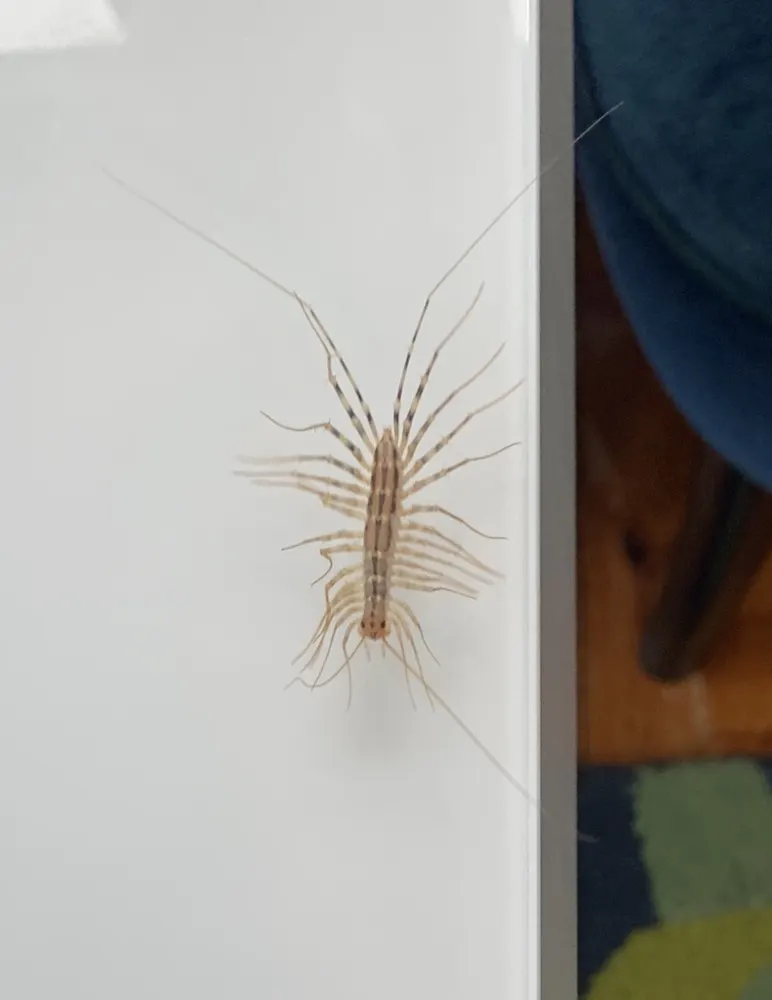
Check these features
- 15 pairs of very long, thin legs with light and dark bands
- Grayish-yellow to tan body with three dark stripes running down the back
- Very long antennae in front and long trailing legs at the back, so it is hard to tell head from tail
- Runs very fast across floors and walls, often at night
Bites and stings
Bites are rare because the centipede usually runs from people. A bite can sting and hurt for a short time, about like a bee or wasp sting, and is not dangerous for most people. Wash the spot with soap and water. Get medical care if you have signs of an allergic reaction, and call 911 for trouble breathing or swelling of the face or throat.
What to do
- Leave it alone or catch it under a cup or with a bug catcher and release it outdoors, or remove it with a vacuum; do not handle it with bare hands.
- If bitten, wash the area with soap and water and watch for any allergic reaction.
- Look for damp spots in basements, bathrooms, laundry rooms and crawl spaces and dry them out.
- Place sticky traps along walls in damp areas to see how many are around.
Look-alikes
Why it came inside
House centipedes like humid places and come inside to hunt insects and spiders. It is the only centipede that can live and breed indoors, and seeing many of them can point to a moisture problem or other pests for them to eat.
Keep it out
- Lower humidity with a dehumidifier in basements and other damp rooms, and fix leaks.
- Seal cracks and gaps around the foundation, doors and windows with caulk and sealant, and keep screens in good repair.
- Cut clutter and keep stored boxes off the floor and away from walls.
- Reduce the insects they feed on, such as cockroaches, silverfish and crickets.
- Do not store firewood indoors, where centipedes can hide under the bark.
What helps
Links go to Amazon search results so you can compare current options. As an Amazon Associate I earn from qualifying purchases. Always follow the product label.
Keeping a basement at about 50 percent humidity or lower makes it less welcoming to the bugs that need damp air.
See options on AmazonSilicone or siliconized acrylic caulk closes cracks around windows, pipes and baseboards. Bigger gaps need foam backer rod or expanding foam first.
See options on AmazonFlat glue traps set along walls and in corners show what is moving through and where. Place them where pets and children can't reach.
See options on AmazonCloses the gap under an exterior door. If you can see daylight under the door, bugs can get in.
See options on AmazonPatches or replaces torn window and door screens, one of the most common ways insects get in.
See options on AmazonA long-handled catcher moves a spider or insect outside without you having to touch it.
See options on AmazonLets you remove bugs, webs and egg sacs without touching them. Empty the bag or canister outside right away.
See options on AmazonSources
- Clemson University Cooperative Extension (HGIC)
- Missouri Department of Conservation
- Oklahoma State University Extension
Checked October 18, 2026. Rating backed by 3 sources. How we rate danger.