
Spotted lanternfly
Spotted lanternflies cannot bite or sting people or pets, but they are a regulated invasive pest that harms trees, grapes and other plants, so many states ask you to destroy and report them.
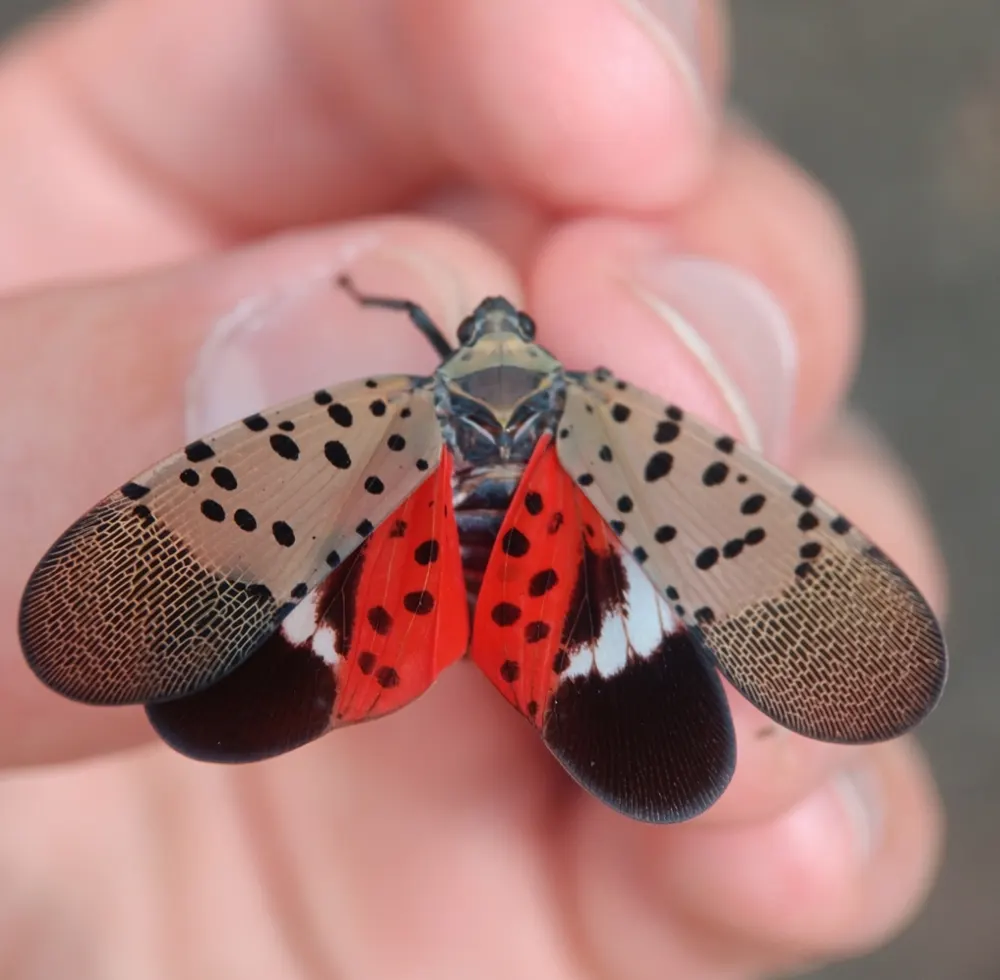
Check these features
- Adult at rest looks like a gray-tan moth with black spots and a brick-like pattern at the wing tips
- Flashes bright red, black and white hind wings when it jumps or flies
- Yellow abdomen with black bands
- Young nymphs are black with white spots; older nymphs (mid to late summer) are red with black and white spots
- Egg masses look like a smear of gray mud or putty about 1 inch long, often on trees, siding, decks, cars and outdoor gear
Bites and stings
Does not bite people.
What to do
- If you can, squash or swat the insect; this is what infested states ask residents to do.
- Take a photo and note the location, then report it the way your state agriculture department asks (many states have an online form); reporting matters most outside the known infested area.
- Scrape any egg masses into a sealed bag with rubbing alcohol or hand sanitizer, or smash them thoroughly.
- Check your car, trailer and outdoor items before leaving an area with lanternflies so you do not carry them to a new place.
- Skip home-made sprays and broad insecticide spraying, which harm pollinators; ask your county extension office about control on valuable trees.
Look-alikes
Why it came inside
It is an outdoor plant feeder and does not infest homes, but adults land on siding and decks and can ride into garages, cars and houses by accident. Egg masses are often laid on house walls, patio furniture and vehicles.
Keep it out
- Inspect vehicles, firewood, grills, mowers and camping gear for adults and egg masses before moving them, especially in or out of a quarantine zone.
- Keep car windows closed when parked near trees in infested areas.
- Check outdoor furniture and equipment for egg masses before storing it for winter.
- Follow your state's quarantine rules if you live or work in a quarantined county.
What helps
Links go to Amazon search results so you can compare current options. As an Amazon Associate I earn from qualifying purchases. Always follow the product label.
A long-handled catcher moves a spider or insect outside without you having to touch it.
See options on AmazonA 10x magnifier makes small features easier to check, like eye patterns, markings or the shield on a tick.
See options on AmazonSources
- Penn State Extension
- University of Maryland Extension
- USDA APHIS
- University of Rhode Island Biocontrol Lab
Checked October 18, 2026. Rating backed by 2 sources. How we rate danger.