
Broad-faced sac spider
Common fall house visitor that can give a painful, bee-sting-like bite if trapped against skin; rarely serious, but keep the bite clean.
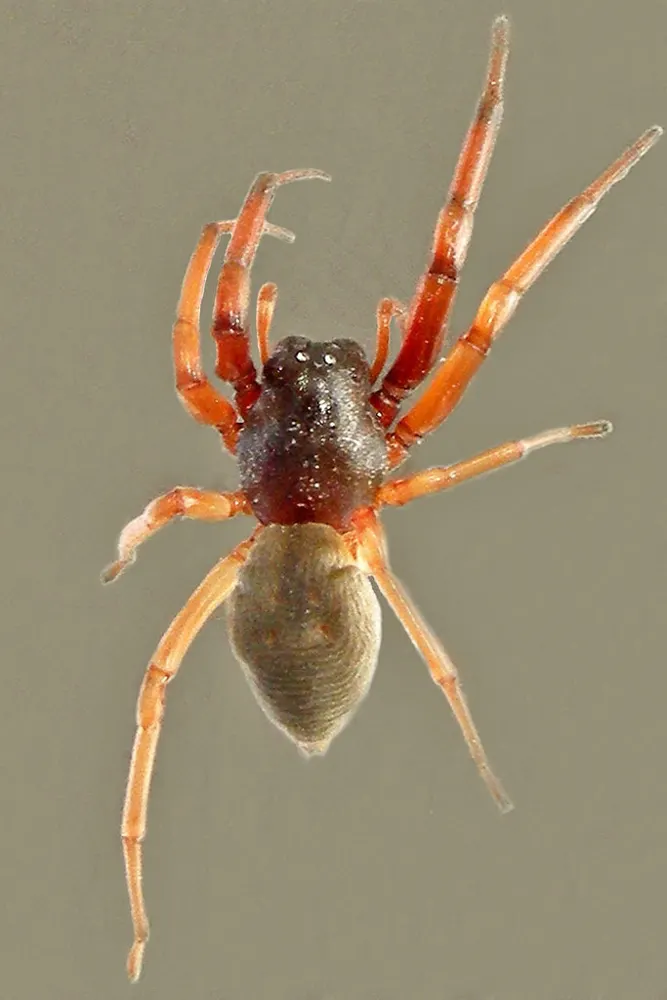
Check these features
- Shiny, hard-looking reddish-brown to dark orange-brown front body and thick, forward-jutting jaws (the 'broad face')
- Dull pale yellow to light gray abdomen, sometimes with a faint darker stripe
- Front legs darker and thicker than the back legs, which get paler toward the rear
- No web; hides by day in a silk retreat and wanders at night
- Often seen walking on walls, ceilings or bedding in autumn
Bites and stings
Bites happen when the spider is trapped against skin, often in bedding or clothing. A bite is sharply painful and leaves redness similar to a bee or wasp sting. Some bites have become infected, possibly because the spider scavenges dead insects. Clean the bite well and watch it. Get medical care if redness spreads, the area becomes hot, swollen or oozes, a sore forms, or you develop fever; call 911 for any sign of a severe allergic reaction such as trouble breathing or swelling of the face or throat.
What to do
- Wash the bite well with soap and water and apply a cool, damp cloth.
- Keep it clean and covered and watch it for several days.
- Call 911 for trouble breathing or swelling of the face or throat.
- See a doctor if redness spreads, the area becomes hot, swollen or oozes, or you get a fever.
- Vacuum up or jar and release any spiders you find.
Look-alikes
Why it came inside
It lives outdoors on plants, under bark, stones and siding, and adult females often wander indoors in autumn as temperatures drop, seeking warmer, drier shelter; it does not usually breed indoors.
Keep it out
- Seal gaps around windows, siding, sills and door frames before fall.
- Fit door sweeps and keep window screens in good repair.
- Shake out bedding and clothing in autumn if you see these spiders indoors, and keep beds away from walls.
- Vacuum spiders and retreats from corners and window frames.
What helps
Links go to Amazon search results so you can compare current options. As an Amazon Associate I earn from qualifying purchases. Always follow the product label.
Lets you remove bugs, webs and egg sacs without touching them. Empty the bag or canister outside right away.
See options on AmazonCloses the gap under an exterior door. If you can see daylight under the door, bugs can get in.
See options on AmazonSilicone or siliconized acrylic caulk closes cracks around windows, pipes and baseboards. Bigger gaps need foam backer rod or expanding foam first.
See options on AmazonSeals the gaps around doors and windows that let in drafts and bugs alike.
See options on AmazonPatches or replaces torn window and door screens, one of the most common ways insects get in.
See options on AmazonFlat glue traps set along walls and in corners show what is moving through and where. Place them where pets and children can't reach.
See options on AmazonA long-handled catcher moves a spider or insect outside without you having to touch it.
See options on AmazonSources
- Penn State Extension
- University of Maryland Extension Home & Garden Information Center (Ask Extension)
- World Spider Catalog, Natural History Museum Bern
- Eastern Virginia Medical School researcher profile
Checked October 18, 2026. Rating backed by 4 sources. How we rate danger.