
House cricket
House crickets are harmless to people; the worst they do is chirp all night and, in large numbers, chew on fabrics.
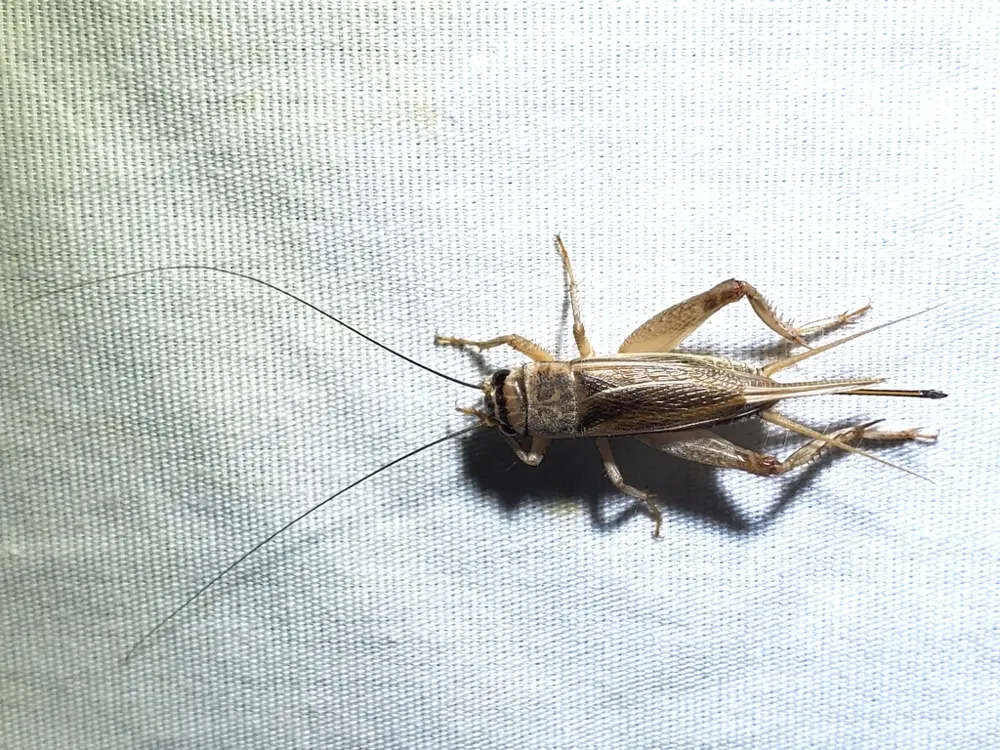
Check these features
- Light yellowish-brown to tan body
- Three dark bands running across the top of the head
- Wings lie flat on the back; long, thin antennae longer than the body
- Two thin tail feelers at the rear; females also have a long, needle-like egg-laying tube
- Males chirp, mostly at night
Bites and stings
Does not bite people.
What to do
- Catch it under a cup or with a bug catcher and put it outside, or vacuum it up.
- To find a chirping cricket, follow the sound, then stay still; it will usually start again after a pause.
- Put sticky traps near the spot where the chirping comes from, along baseboards and in the garage or basement.
- Check stored wool, silk and stained clothing nearby for chew damage if you have seen several crickets.
Look-alikes
Why it came inside
House crickets are drawn to lights at night and slip in through gaps under doors, foundation cracks and torn screens, especially when evenings cool off; indoors they look for warm, dark spots behind baseboards, under stairs and in clutter.
Keep it out
- Install door sweeps and weatherstripping and repair torn window screens.
- Caulk foundation cracks and gaps around vents and pipes.
- Switch outdoor lights to yellow bug bulbs or turn them off at night, and close shades.
- Clear firewood, boards, rocks and thick plants away from the foundation.
What helps
Links go to Amazon search results so you can compare current options. As an Amazon Associate I earn from qualifying purchases. Always follow the product label.
Flat glue traps set along walls and in corners show what is moving through and where. Place them where pets and children can't reach.
See options on AmazonCloses the gap under an exterior door. If you can see daylight under the door, bugs can get in.
See options on AmazonSeals the gaps around doors and windows that let in drafts and bugs alike.
See options on AmazonSilicone or siliconized acrylic caulk closes cracks around windows, pipes and baseboards. Bigger gaps need foam backer rod or expanding foam first.
See options on AmazonPatches or replaces torn window and door screens, one of the most common ways insects get in.
See options on AmazonA long-handled catcher moves a spider or insect outside without you having to touch it.
See options on AmazonLets you remove bugs, webs and egg sacs without touching them. Empty the bag or canister outside right away.
See options on AmazonSources
- University of Arizona Cooperative Extension (Crickets)
- University of Maryland Extension
- University of Minnesota Extension
- University of Missouri Extension
- University of Florida IFAS Extension (EDIS)
Checked October 18, 2026. Rating backed by 3 sources. How we rate danger.